

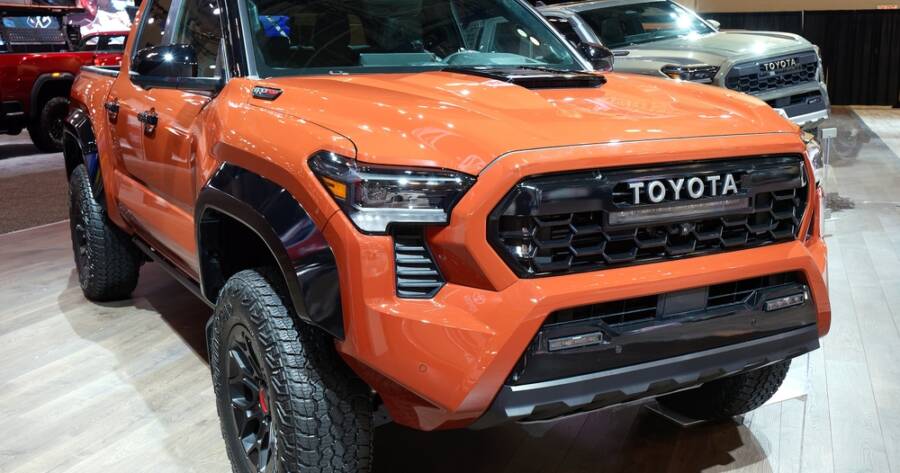
The Toyota Tacoma remains one of the most popular midsize pickup trucks because it blends proven capability with modern comfort. Its rugged design and strong off-road reputation help it stand out in a crowded market. Drivers can also choose from practical work-ready models or more adventurous trims built for rough terrain. With useful technology, confident performance, and the versatility to handle weekday jobs or weekend plans, the Tacoma continues to appeal to a wide range of truck buyers.
A Diverse Lineup for Different Types of Truck Buyers
The 2026 Toyota Tacoma starts at an MSRP of $32,445, although the final price depends heavily on trim, drivetrain, cab style, bed length, and optional equipment. Entry-level models provide the core capabilities many truck owners need, while upper trims add premium comfort, advanced technology, and specialized off-road hardware. Rear-wheel drive and four-wheel drive configurations are also available, allowing shoppers to prioritize affordability, fuel economy, or traction.
Buyers can also choose between the two-door XtraCab and four-door Double Cab, depending on the selected trim. The XtraCab pairs with a six-foot cargo bed and focuses more on cargo and utility than rear passenger seating. Double Cab models offer room for up to five occupants and can be configured with either a five-foot or six-foot bed. Such variety helps the Tacoma suit commuters, contractors, outdoor enthusiasts, and families.
Turbocharged and Hybrid Powertrains Provide Flexible Performance
Every nonhybrid 2026 Tacoma uses a turbocharged 2.4-liter four-cylinder engine, but output varies by configuration. The entry-level SR produces 228 horsepower, while stronger i-FORCE versions generate up to 278 horsepower and 317 pound-feet of torque. Depending on the trim, the engine pairs with either an eight-speed automatic transmission or a six-speed manual transmission. Manual availability gives the Tacoma an unusual advantage for drivers who still prefer greater control over gear changes.
For maximum output, Toyota offers the i-FORCE MAX hybrid powertrain. It produces up to 326 horsepower and 465 pound-feet of torque, giving the Tacoma strong low-speed power for trails, hauling, and everyday acceleration. The hybrid system focuses on capability and torque rather than fuel savings alone. Drivers should compare each powertrain carefully because towing capacity, payload, fuel economy, transmission availability, and pricing can vary considerably across the lineup.
Towing and Payload Ratings Support Real Truck Duties
Properly configured nonhybrid Tacoma models can tow up to 6,500 pounds. That rating may be suitable for a small travel trailer, utility trailer, boat, recreational equipment, or other moderate loads. The i-FORCE MAX hybrid has a maximum tow rating of 6,000 pounds. Actual limits depend on the truck’s trim, drivetrain, cab, bed, equipment, passenger weight, and installed accessories, so buyers should check the rating for a specific configuration before towing.
Payload capacity is equally important because it includes passengers, cargo, tools, accessories, and tongue weight from a trailer. Nonhybrid Tacoma models can carry up to 1,705 pounds, while certain hybrid configurations offer up to 1,710 pounds. Higher trims with added equipment may have lower ratings despite costing more. Owners should review the certification label inside the driver’s door and stay within Toyota’s limits when loading the bed or connecting a trailer.
Off-Road Hardware Builds on Tacoma’s Rugged Reputation
The Tacoma has long attracted drivers who enjoy off-road travel, and the 2026 lineup includes several features designed for difficult terrain. Available equipment includes Crawl Control, a Stabilizer Disconnect Mechanism, specialized suspension systems, and a multi-link rear suspension. Crawl Control can manage low-speed acceleration and braking under certain conditions, allowing the driver to concentrate more closely on steering across rocks, sand, mud, or uneven ground.
TRD Pro and Trailhunter models offer equipment intended for more demanding adventures. A high-clearance front bumper helps improve the approach angle, while model-specific suspension components support better control on rough surfaces. The TRD Pro also offers IsoDynamic Performance front seats designed to help stabilize occupants during aggressive off-road driving. Trail-focused equipment can add high cost, but drivers who regularly leave paved roads may appreciate the added clearance, traction support, protection, and suspension capability.
A More Comfortable Cabin Meets Useful Bed Features
The current Tacoma generation offers a more refined interior than earlier versions. Its raised seating position, greater headroom, improved steering-wheel adjustment, and upgraded materials create a more comfortable environment for everyday travel. Most trims include a 7-inch digital gauge display, while TRD Off-Road and higher models receive a larger 12.3-inch digital cluster. Limited models add features such as a head-up display and heated and ventilated front seats.
Technology includes a standard 8-inch infotainment touchscreen on most models, with an available 14-inch screen on selected trims. Wireless Apple CarPlay and Android Auto come standard, while options include wireless phone charging and a JBL audio system with a removable Bluetooth speaker. Behind the cabin, the aluminum-reinforced composite bed is available in five-foot and six-foot lengths. Available features include LED scene lighting, an onboard air compressor, auxiliary switches, and a 2,400-watt AC power supply on hybrid models.
Fuel Economy and Safety Add Everyday Practicality
The 2026 Tacoma is built for capability, but fuel economy remains respectable for a midsize body-on-frame pickup. Certain nonhybrid configurations are estimated to return as much as 21 mpg in the city, 26 mpg on the highway, and 23 mpg combined. Results will depend on the engine, drivetrain, tires, trim, cargo load, driving conditions, and driving style. Off-road equipment and more aggressive tires may reduce efficiency compared with street-focused versions.
Toyota also equips the Tacoma with an assortment of driver-assistance and convenience technologies. Automatic high-beam headlights are included, while features such as blind-spot monitoring and rear cross-traffic alert are available. Such systems may help identify surrounding traffic, particularly when changing lanes or reversing from a parking space. Combined with available four-wheel drive and a strong chassis, the technology adds confidence without diminishing the Tacoma’s traditional truck character.
A Midsize Pickup Ready for Work and Recreation
The 2026 Toyota Tacoma offers enough variety to appeal to buyers with very different priorities. Affordable trims cover everyday transportation and light-duty work, while powerful hybrid models, specialized TRD versions, and the adventure-focused Trailhunter support more demanding uses. Multiple cab and bed configurations also let shoppers choose between passenger space, cargo room, and easier maneuverability.
Its maximum 6,500-pound towing capacity, payload ratings above 1,700 pounds, modern cabin technology, and extensive off-road equipment make the Tacoma a versatile midsize pickup. Not every buyer needs the most powerful engine or the most rugged trim, so comparing configurations is essential. Choosing carefully can provide a truck that handles commuting, hauling, weekend projects, camping trips, and trail travel without paying for capabilities that may rarely be used.